
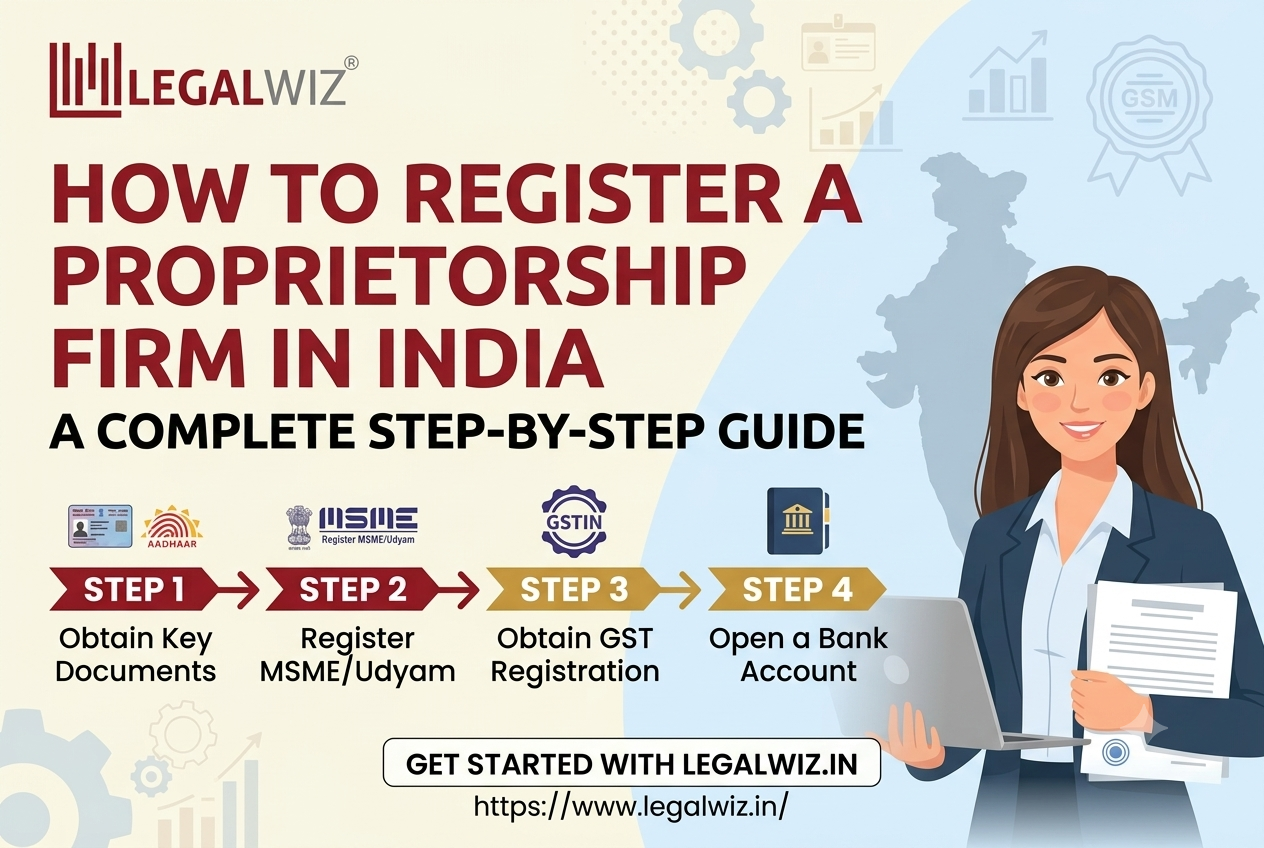
Starting a business is an exciting milestone for any aspiring entrepreneur, and choosing the right structure is the foundational step toward long-term success. Among the various business formats available, the single-owner model remains the most popular choice for small traders, freelancers, consultants, and local service providers due to its minimal regulatory burden. Unlike private limited companies or limited liability partnerships, launching this type of enterprise does not involve a central incorporation portal like the Ministry of Corporate Affairs (MCA). Instead, the legal existence of the business is established through a combination of tax registrations, industry-specific licenses, and operational accounts.
For anyone embarking on this entrepreneurial journey, completing a formal proprietorship firm registration is vital for building market credibility, opening commercial bank accounts, and scaling operations smoothly. Because the business and the owner are legally considered one and the same entity, the setup procedure focuses primarily on acquiring regulatory compliance documents that validate your commercial activities. This comprehensive manual outlines every critical phase required to establish your business legally, manage documentation efficiently, and position your enterprise for steady financial growth.
1. Understand the Legal Nature and Prerequisites
Before diving into paperwork, it is essential to understand what defines this business format. There is no separate legal distinction between you and your enterprise, meaning you retain total control over profits but also hold unlimited personal liability for business debts. To begin, you must ensure you have key personal documents ready, including your Permanent Account Number (PAN) card and Aadhaar card, which serve as the primary identifiers for all subsequent legal applications.
2. Choose a Distinct Business Name
Selecting a catchy and relevant name is your next priority. You can operate under your own personal legal name or adopt a distinct trade name. While trade names offer a more professional brand appeal, you must ensure the chosen moniker does not infringe upon existing registered trademarks. Keep a few alternative options ready in case your primary choice is already claimed.
3. Register for MSME (Udyam)
Obtaining an MSME registration through the government’s online Udyam portal is one of the smartest early moves you can make. This registration is entirely free, paperless, and based on self-declaration. Securing an MSME certificate grants your enterprise official recognition, helps protect against delayed payments from buyers, and makes it easier to secure subsidized business loans from financial institutions.
4. Obtain a Shop and Establishment License
Most state governments require commercial establishments to register under the local Shop and Establishment Act. This license is typically issued by the local municipal corporation or state labor department. It acts as legal proof that your physical office, retail store, or workspace operates within local laws and is mandatory for opening a corporate bank account in many jurisdictions.
5. Apply for GST Registration
Goods and Services Tax (GST) registration is compulsory if your annual turnover crosses specific thresholds—typically ₹40 lakhs for goods suppliers and ₹20 lakhs for service providers—or if you engage in inter-state commerce. Even if your turnover falls below these limits, obtaining a voluntary GST number is highly recommended if you plan to sell products on e-commerce marketplaces or deal with corporate clients who demand input tax credit.
6. Open a Dedicated Current Bank Account
Never mix personal finances with business earnings. Once you have secured your primary documents like your PAN, Udyam certificate, and Shop and Establishment license or GST number, approach a scheduled commercial bank to open a current account under your business trade name. Clean financial record-keeping keeps tax audits stress-free.
Executing a seamless sole proprietorship registration India requires careful attention to detail, proper licensing, and adherence to local municipal rules. By methodically clearing each compliance hurdle—from securing your MSME status to opening a dedicated current account—you lay a rock-solid foundation for future commercial expansion and long-term operational stability.